What Does the 7 Heavenly Virtues Test Measure?
The 7 heavenly virtues test evaluates the seven constructive habits developed in classical moral philosophy as direct remedies to human excess: Humility, Charity, Chastity, Kindness, Temperance, Patience, and Diligence. Where our main 7 deadly sins test examines which impulses pull you off center when ego, money, appetite, or frustration flare up, this companion seven heavenly virtues test looks at which stabilizing strength you naturally reach for when nobody is forcing your hand.
In fifth-century Latin poetry - most famously Prudentius's Psychomachia - moral life was pictured not as passive rule-following, but as an active craft of counter-balance. Every destructive habit had an opposite muscle that could be trained through daily choices. Taking a 7 heavenly virtues test turns that classical framework into a practical modern checkup: where do you already show steadiness, and which virtue goes missing when your calendar gets crowded?
The Seven Counter-Virtues and Their Everyday Meaning
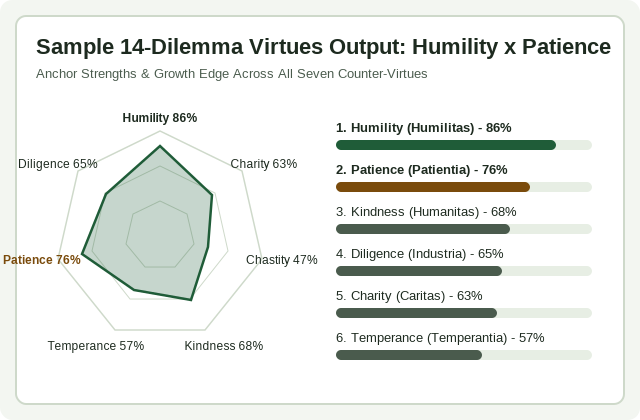
Each axis in the 7 heavenly virtues test corresponds to one specific capital vice and measures observable behavior rather than lofty intentions:
| Heavenly Virtue | Latin Root | Sin It Counters | How It Looks on an Ordinary Tuesday |
|---|---|---|---|
| Humility | Humilitas | Pride | Naming teammates' contributions first and welcoming accurate correction without defensiveness |
| Charity | Caritas | Greed | Sharing margin, tools, money, or credit freely without keeping a hidden debt ledger |
| Chastity | Castitas | Lust | Keeping undivided fidelity and wholehearted focus on chosen commitments past the novelty phase |
| Kindness | Humanitas | Envy | Celebrating a peer's breakthrough sincerely instead of scanning for reasons it was undeserved |
| Temperance | Temperantia | Gluttony | Knowing when enough food, entertainment, spending, or screen stimulation is enough |
| Patience | Patientia | Wrath | Holding steady composure during delays, misunderstandings, or sharp provocation |
| Diligence | Industria | Sloth | Showing up for unglamorous, meaningful effort even when motivation feels flat |
Why Comparing Your Virtues and Sins Profiles Matters
Self-assessments become far more revealing when you look at both sides of the ledger together. After readers finish this 7 heavenly virtues test, three recurring patterns tend to stand out:
- True Anchor Strengths: A virtue scoring above 75% paired with a low score on its opposite sin marks a settled habit. Friends and coworkers likely rely on you for this trait during stressful weeks.
- Tug-of-War Zones: Scoring high on Kindness here while also scoring high on Envy on the sins spectrum is common. It describes someone who genuinely supports people in public yet quietly aches over peer comparisons in private.
- Quiet Blind Spots: Your lowest bar on the 7 heavenly virtues test often points to the exact habit that drains your energy - such as low Temperance after long workdays or low Diligence on open-ended personal goals.
How to Read Your Seven Percentages Without Perfectionism
Classical writers never expected anyone to max out all seven bars at once. Because each prompt in this seven heavenly virtues test asks you to choose among four worthwhile responses - speaking up kindly, working diligently behind the scenes, waiting patiently, or giving generously - your percentages reflect priority rather than moral worth. A 35% score on Temperance simply means that when forced to choose, you prioritized generosity, patience, or hard work ahead of restraint.
Want to inspect the historical roots and scripture parallels behind all fourteen traits? Visit our seven deadly sins meaning guide, or compare your everyday instincts with a friend on the Seven Deadly Sins Percentage Quiz.
No reflections posted on this page yet. Be the first to share your seven-trait profile.